There is a sentence that keeps coming back to us from our conversations with platform workers across Latin America: “I’m my own boss — except when I’m not.” The rider who can’t log off without losing his ranking. The driver who gets deactivated with no explanation and no one to call. The domestic worker whose app-mediated ‘client’ is actually directing every step of her work. Flexible, yes. Independent, not quite.
For years, the platform economy built its model on exactly this ambiguity. Companies like Uber, Rappi, PedidosYa, and InDrive captured millions of workers in Latin America inside a legal grey zone — people doing subordinated, directed, economically dependent work, but classified as independent contractors to avoid every obligation that employment entails: social security, minimum wage, collective bargaining, the right to organize. An app, in this model, is not just a technology. It is a labor relations strategy.
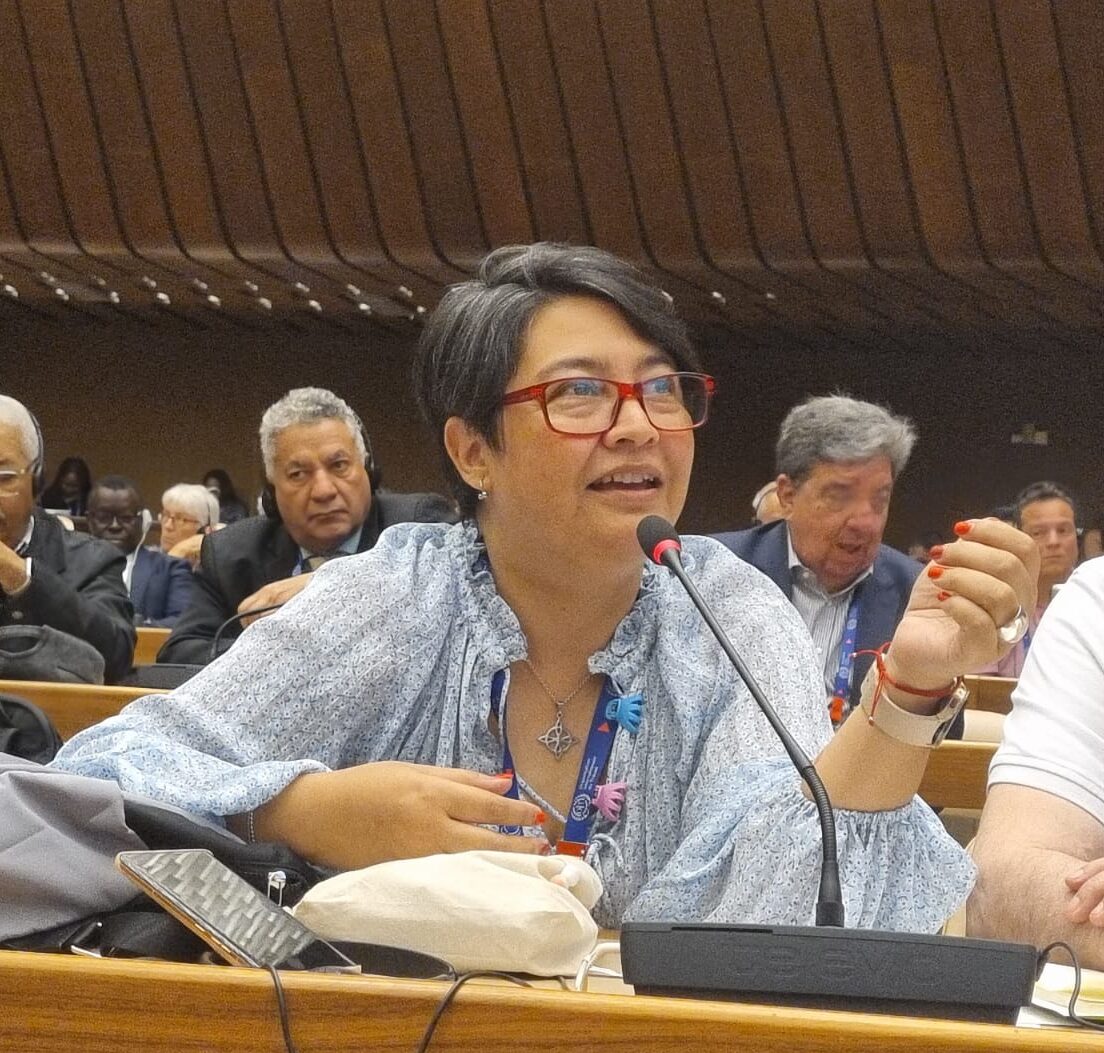
What changed that was not a government decision. It was a decade of organizing — delivery riders who built unions between shifts, drivers who took platforms to court, women workers who fought for space inside national labor movements and then wove the international alliances that put them in the negotiating rooms in Geneva. On June 12, 2026, the 114th International Labour Conference adopted the Decent Work in the Platform Economy Convention (No. 193) — the first binding international labor standard for the platform economy. Workers won it.
Now comes the harder part. The rightward shift across much of Latin America has left the region fragmented rather than unified — in Geneva, that division cost us the companion Recommendation that would have gone further than the binding minimum. On ratification, the same headwind applies. A convention that no country in the region ratifies is a moral victory without legal consequence. What follows is our attempt to read Convention 193 carefully — what it wins, what it leaves open, and why Latin America, with its hard-won experience of platform regulation and its organized workers, has both the most to gain and the most urgent reasons not to wait.
What the convention says — Read carefully
The convention’s most important structural feature is that it refuses to let employment classification determine whether a worker gets rights. This is not a small thing. The fundamental problem of platform work law, globally, has been that every protection is conditioned on proving employment status — and proving employment status requires winning a legal battle that most workers cannot afford to fight, against companies with entire legal departments dedicated to maintaining the fiction of independence.
Convention 193 sidesteps this trap: it covers all platform workers, regardless of whether they are employees or self-employed. The fundamental protections attach to the work, not the label.
On classification itself (Art. 9), the convention establishes that workers’ status must be determined primarily by the facts of how the work is actually performed — not by what the platform’s standard-form contract says. This means the relevant questions become: Who controls the schedule? Who sets the price? What happens when you don’t comply? Who can deactivate you and why? These are the real indicators of power in a working relationship. And when those indicators point to subordination and economic dependence—when the algorithm is, functionally, the supervisor — the legal label cannot simply override that reality.
On algorithmic management, the convention breaks genuinely new ground. For the first time in binding international law, the way algorithms control platform work is brought within the frame of labor rights.
On algorithmic management, the convention breaks genuinely new ground. For the first time in binding international law, the way algorithms control platform work is brought within the frame of labor rights. Platforms are required to inform workers—and their representatives—about automated systems used to monitor, evaluate, and make decisions. Algorithms cannot be used in ways that violate fundamental rights at work: they cannot be deployed to detect and penalise union activity, discriminate on prohibited grounds, or drive work intensities that make occupational health and safety impossible. When automated systems make significant decisions affecting workers’ access to work or income — including deactivation — workers have the right to a written explanation and to a review with genuine human involvement. Not a token process. An actual person with actual authority to reverse the decision.
This matters in a region where deactivation is one of the primary instruments of platform power. In our conversations with workers from Peru, Panama, Brazil, and Mexico, deactivation functions as the ultimate disciplinary tool: it cannot be appealed, the reasons are not explained, and its logic is opaque. The convention challenges this directly.
For Latin America, where the entire architecture of misclassification is designed to keep workers outside employee status, this is a real gap.
One limitation must be stated clearly: the minimum remuneration guarantee — that workers’ earnings should not fall below the minimum wage — applies in the convention only to employees. Legitimately self-employed workers are not covered by this floor as a matter of binding obligation, though states are encouraged to consider extending it. For Latin America, where the entire architecture of misclassification is designed to keep workers outside employee status, this is a real gap. It is the compromise that made adoption possible. It is also the next front.
What Latin America taught the world and what we’re still learning
We come to this convention not as observers but as people who have been in the rooms where these debates happen at the national level — and who have seen both what organized workers can win and what gets lost when the law moves faster than enforcement can follow.
Chile was the first country in the region to regulate platform work. Law 21.431, which came into force in 2022, established minimum pay for platform workers at 120% of the minimum wage, a right to disconnection, some data protection, and, crucially, the right to unionize, extended even to independent workers. When the law passed, it felt like a breakthrough. When companies failed to comply, we pushed for inspections. When inspections revealed partial compliance, we pushed harder.
Disclosure is not the same as transparency. A formula you cannot check is not accountability; it is the appearance of accountability in service of the same opacity.
The evaluation process has been revealing. Workers consistently report that even where pay information is technically disclosed, it is so complex that they cannot verify whether their payments are correct. Disclosure is not the same as transparency. A formula you cannot check is not accountability; it is the appearance of accountability in service of the same opacity. This is something the convention’s algorithmic transparency provisions will have to grapple with at the implementation level: genuine transparency means information that workers can actually use, in a format they can actually understand.
The deeper structural problem in Chile remains the question of classification. The law did not adopt any presumption that platform workers exhibiting characteristics of subordination should be treated as employees. That burden remains on workers—on individual workers, through individual legal action, against companies with far greater resources. The convention’s approach — determine classification from the facts of the working relationship—points toward a stronger model, and Chilean unions should use it to push for reform.
Mexico moved further and more recently. The December 2024 reform to the Ley Federal del Trabajo recognized platform workers as employees when they earn at least a monthly minimum wage through a single platform—granting access to IMSS social security, holiday pay, profit-sharing, and collective bargaining rights. The reform was, in important ways, co-designed with workers: unions like UNTA (Unión Nacional de Trabajadores por Aplicación) participated in roundtable discussions to develop implementation protocols, because workers’ direct experience is the only reliable guide to the ambiguities that legal text alone cannot resolve — how to calculate contributions when hours fluctuate, how to handle workers active on multiple platforms, what counts as ‘the same’ company across different apps.
A reform that was genuinely progressive in design is, in practice, deepening the gender gaps it did not explicitly address.
But the threshold design carries a built-in exclusion problem—and it falls hardest on women. The mechanism works like this: platforms apply an ‘exclusion percentage’ to workers’ gross earnings before calculating net income, ostensibly to cover operational costs like fuel and vehicle maintenance. In practice, this discount reduces recognized income so significantly that as of January 2026, only 139,000 of the 1.3 million platform workers registered with IMSS actually reached the monthly income threshold for full social security coverage—roughly 10%. UNTA put it plainly: “The current model reproduces exclusion, conditions rights, and keeps almost nine out of ten workers outside the complete social security system.” The gender breakdown makes this worse: of those who did reach full coverage, 94% are men and only 6% are women. Women are already a minority of the platform workforce, concentrated in lower-paid modalities with fewer hours—and the threshold filters them out at exactly that intersection of low income and care-constrained schedules. A reform that was genuinely progressive in design is, in practice, deepening the gender gaps it did not explicitly address.
Compliance compounds the problem: only Rappi has distributed profit-sharing to eligible workers; Uber justified non-payment by arguing that, having created a new legal entity to comply with the reform, it is technically a new company and therefore exempt in its first year — even though it has operated in Mexico for years.
The gender dimension cannot be an afterthought
When people talk about platform workers in Latin America, they usually picture a man on a bicycle. That image is not inaccurate — delivery work is predominantly male—but it is profoundly incomplete.
Women in the platform economy work in the less-visible sectors: domestic work mediated by apps, care services, sex work, personal assistance, online retail, data labeling, and microtask platforms. These sectors are characterized by lower pay, greater informality, weaker organization, and far higher exposure to harassment and violence. In many cases, they fall outside the scope of platform work legislation that defines itself around physical delivery and transport.
The platform economy did not create the gender hierarchy of work — it inherited it, digitized it, and in some ways deepened it.
This is not a coincidence. The platform economy did not create the gender hierarchy of work — it inherited it, digitized it, and in some ways deepened it. The ‘flexibility’ that platforms offer is most attractive to workers who already need to fit paid work around unpaid care — and those workers are overwhelmingly women. The irregularity of income, the inability to project earnings forward, the absence of paid leave or job security — these fall hardest on people with care responsibilities, with migration precarity, with less access to formal labor markets. In Latin America, that intersection is particularly sharp.
In October 2023, Latin American women platform workers and unionists came together to define a gender-focused regulatory agenda, specifically aimed at influencing the ILC discussions in Geneva. That work was not decorative. The convention’s language on psychosocial risks and intersectionality, and the inclusion of gender bias in algorithmic systems within the scope of prohibited discriminatory use, reflect that sustained organizing pressure. The Workers’ Group had to defend that language actively against employer resistance during the final negotiations in June 2026.
The convention’s prohibition on discriminatory algorithmic management and its transparency provisions extended to workers’ representatives open real possibilities. Rating systems that structurally disadvantage women—whether through the dynamics of customer rating, the geography of task assignment, or the pricing of feminized services — can now be challenged as inconsistent with fundamental rights at work. That challenge requires feminist union analysis, collective capacity, and strategic use of the convention’s text. None of that happens automatically.
What we have learned from organizing in this sector is that the fragmentation platforms engineer —individual contracts, individual ratings, individual deactivations, no shared physical space — works against collective consciousness as well as collective action. Feminist organizing in platform work means building solidarity across that fragmentation, naming the structural conditions that workers experience as individual misfortune, and insisting that gender is not a secondary consideration to be addressed after the ‘main’ labor rights questions are settled. Gender is a labor rights question.
After Geneva: The fight that continues
Convention 193 is a floor, and floors matter. But what happens above the floor —or whether the floor is actually enforced—depends on what workers and unions do next.
For Latin America, the priorities are clear. First, ratification campaigns that name the convention explicitly and push governments to move. The priorities are clear! Ratification campaigns that name the convention explicitly and push governments to move.
Making that coverage real is the work of unions and worker organizations, in the streets and in the courts, not in Geneva.
Second, national implementation that doesn’t simply declare compliance with existing law but uses the convention to push for stronger classification protections, algorithmic transparency with teeth, and extension of the wage floor to workers outside employee status. Third, collective bargaining strategies that treat algorithms as a legitimate terrain of negotiation — because the convention gives workers and their representatives a legal foothold to demand exactly that. Fourth, enforcement: labor inspectorates equipped and mandated to inspect platform companies, not only in response to individual complaints but systematically, as a structural matter.
And fifth — critically — organizing in the sectors and among the workers who remain invisible in both national law and the convention’s dominant frame. The domestic worker is using an app. The migrant data labeller. The woman is doing care work through a platform that calls her a “freelancer.” The convention covers them. Making that coverage real is the work of unions and worker organizations, in the streets and in the courts, not in Geneva.
As we say elsewhere, “The challenge is to ensure that the algorithm finally respects human dignity — that the future of work is not an algorithm without employer obligations and without rights for workers”. The convention does not guarantee that future. It creates the legal conditions for fighting for it.
That fight, as always, is ours.